
Introduction
Practicing good medicine is only part of building a successful clinic now. If you're having trouble getting new clients, seeing other clinics show up ahead of you in Google, or just feeling lost with online marketing, you're not alone. Most vets want to show up online but aren't sure what to do first.
At Paw Rank, we've looked at hundreds of veterinary websites over the years. The same thing keeps happening: skilled teams get outranked by competitors because of a few small digital missteps. This guide breaks down the practical steps that actually work to help your clinic get found online.
1. Understanding Veterinary SEO: Your Digital Front Door
What is Veterinary SEO?
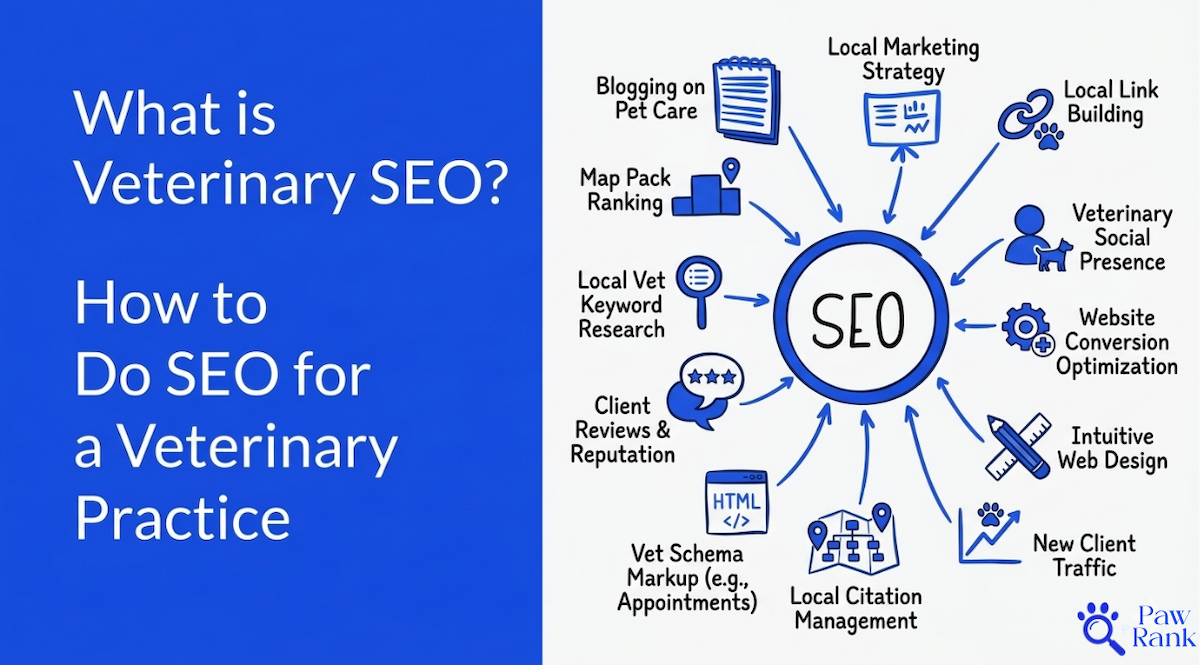
Veterinary SEO means making your website, Google Business Profile, and social media easier to find in search results. The goal is simple: help local pet owners find your clinic when they need a vet.
Good SEO helps you show up in local searches, attract people who actually need a vet, and build trust before they call. When you get this right, you'll rely less on paid ads and see more steady, organic traffic.
Why SEO is Crucial for Veterinary Practices
Most pet owners now use Google to find a vet. Over 90% of people use search engines to find local businesses, including veterinary clinics. When a dog starts limping or a cat won't eat, people grab their phone and search.
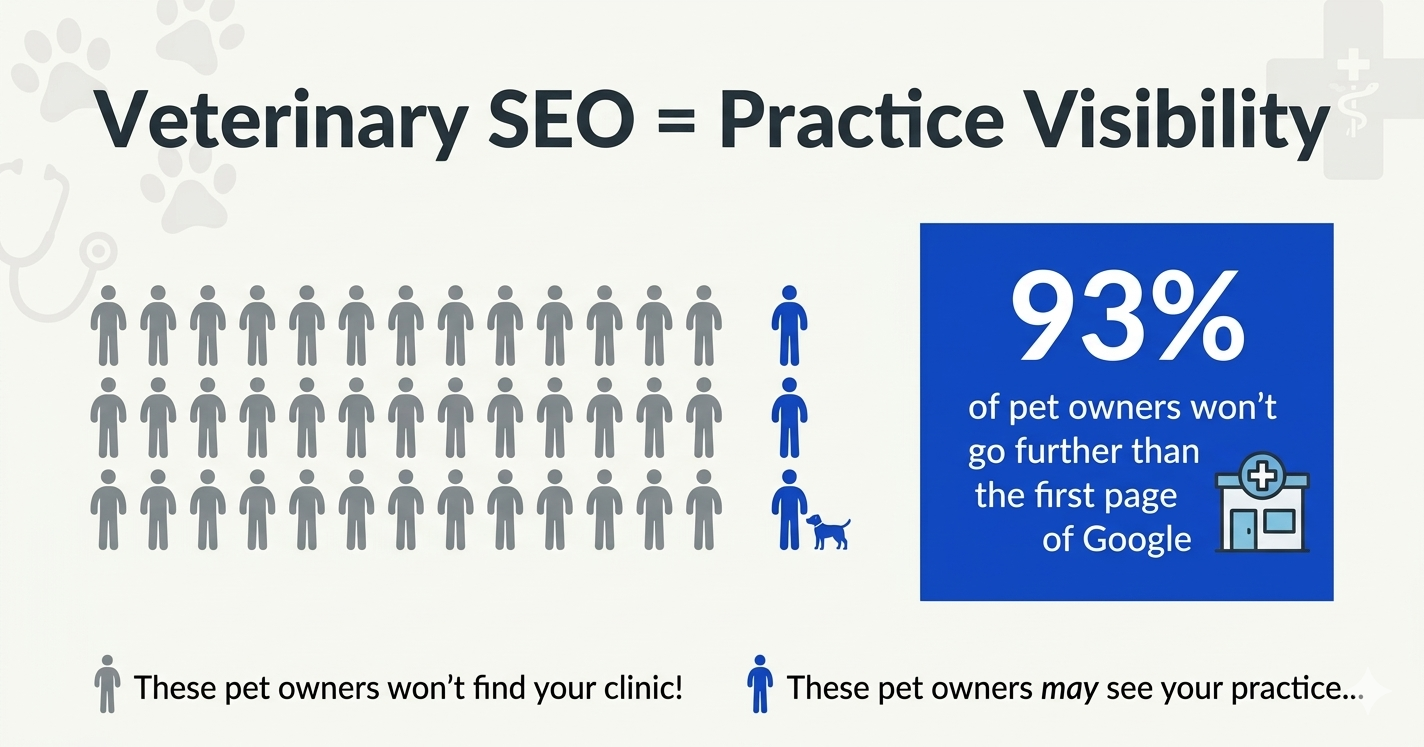
Showing up at the top of Google builds trust. Data shows that almost 93% of searchers don't go past the first page. Most people assume the clinics they see first are the best. If your clinic is near the top, you'll get more calls and appointments.
Local search is competitive, especially for "near me" searches. When someone types "emergency vet near me" or "dog vaccination near me," they're ready to book. Your Google Business Profile is your most important local SEO tool.
Real Results: The Sajjad Pets Clinic Story
The Challenge
Sajjad Pets Clinic offered exceptional care but struggled with low online visibility. Despite a functional website, they were buried in local search results and missing out on predictable new patient flow.
The PAW Rank Solution
We implemented a targeted local SEO strategy — optimizing their Google Business Profile, launching hyper-local keyword campaigns, and executing a content series addressing common pet health questions.
The Results
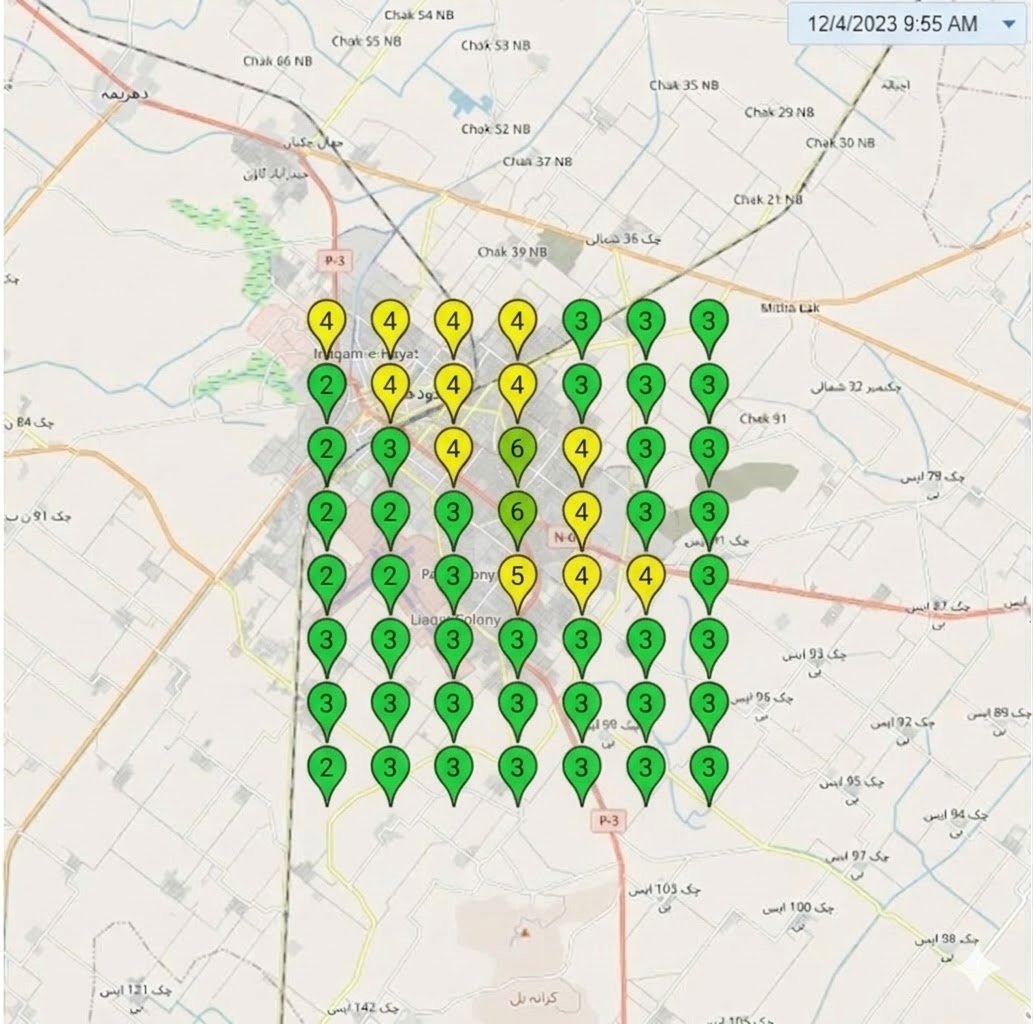
In one month, they saw a 56% increase in new patient calls, moved up to 4th place in local search, and received significantly more reviews.
2. The Pillars of Veterinary SEO
SEO works when you get the basics right. Each part supports your online presence. If you skip one, you'll notice.
Local SEO
Optimize your online presence for "near me" searches. Focus on Google Business Profile, local citations, and geographic keywords.
On-Page SEO
Optimize individual web pages with service-specific keywords, header tags, meta descriptions, and internal linking.
Content SEO
Create valuable blog content answering pet owners' questions, establish authority, and build a library of evergreen resources.
Technical SEO
Ensure fast loading, mobile-friendliness, HTTPS, proper sitemaps, and crawlability for search engines.
Reputation
Actively manage reviews, respond professionally, and build a positive online reputation that attracts new clients.
3. Local SEO for Vets: Showing Up in "Near Me" Searches
Local SEO is where most clinics win or lose. Most clients want a vet close to home. Here's how to make sure they find you.
Google Business Profile (GBP) Optimization
If you're not sure where to start with SEO, begin with your Google Business Profile. Most clients see this first when they search for a vet, and it often decides whether they call you or someone else.
GBP Optimization Checklist:
- Claim and verify your listing
- Use your exact business name (no keyword stuffing)
- Ensure address matches all other online listings
- Add local phone number (mobile tap-to-call)
- Keep hours updated, including holidays
- List all services with specific keywords
- Select precise categories (Veterinarian, Animal Hospital)
- Upload high-quality photos of clinic, team, and patients
- Write a compelling business description (750 chars)
- Post updates 2–3 times per week
- Monitor and answer Q&A section
- Respond to every review promptly
Building Local Citations
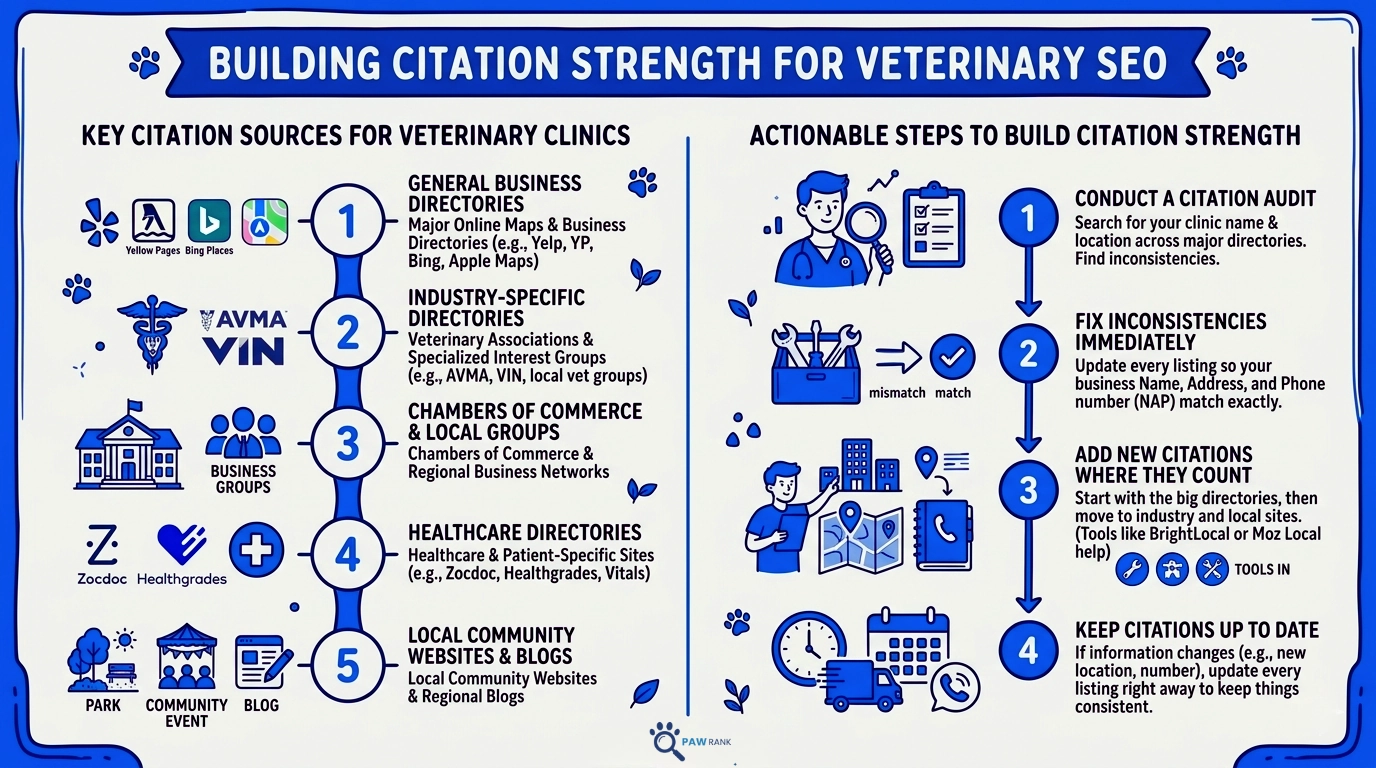
Citations are online mentions of your clinic's Name, Address, and Phone Number (NAP). Consistency across all platforms is critical — even small variations like "Street" vs "St." can hurt your rankings.
Managing Your Online Reputation
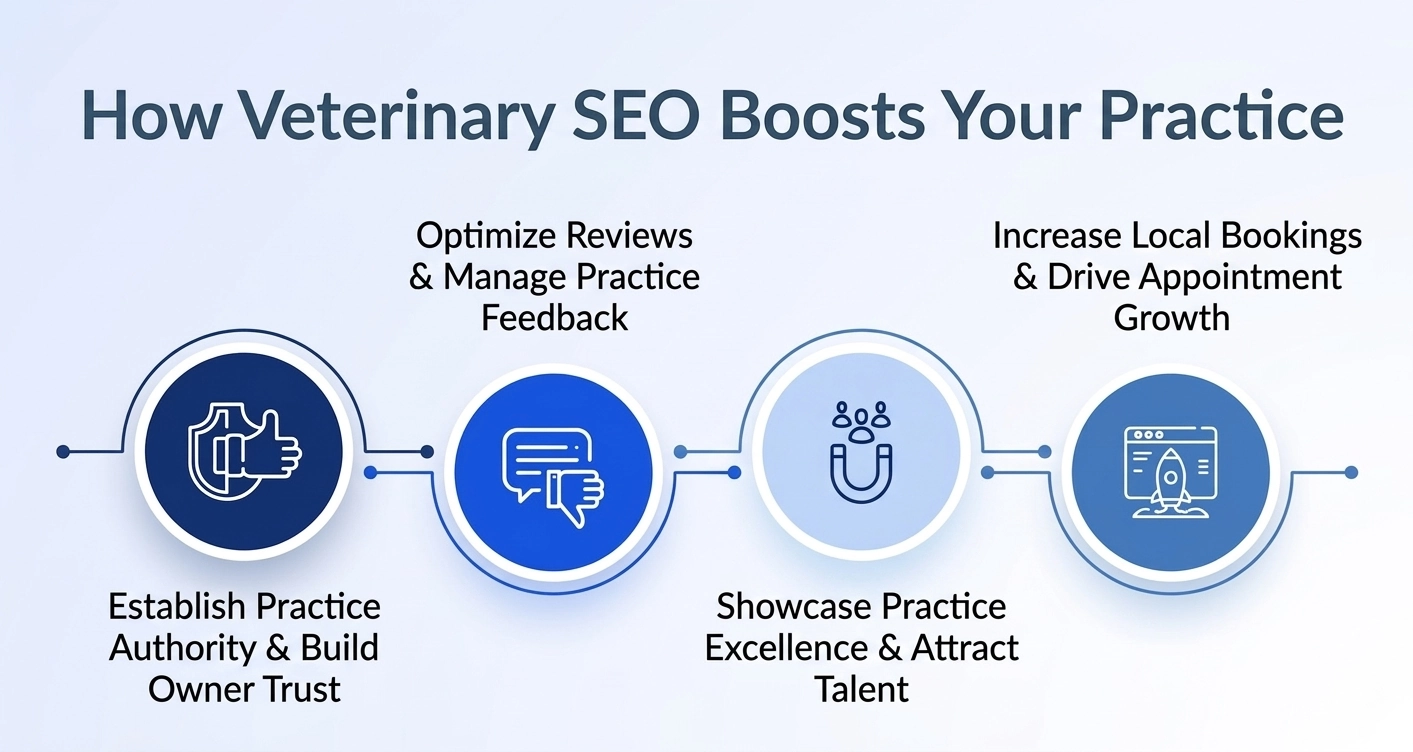
Reviews are social proof. Actively encourage happy clients to leave reviews, and respond to every one — positive with gratitude, negative with empathy and a solution.
4. On-Page SEO for Veterinary Websites
On-page SEO is about optimizing each individual page on your website so search engines understand what it's about and rank it appropriately.
Key On-Page Elements
- Title Tags: Include your primary keyword and location (e.g., "Puppy Vaccinations in Austin | Your Clinic")
- Meta Descriptions: Write compelling descriptions that encourage clicks
- H1 Tags: One per page, clearly describing the page content
- Service Pages: Create dedicated pages for each major service
- Internal Links: Connect related pages to help search engines and users navigate
- Image Alt Text: Describe all images for accessibility and SEO
Website Structure: The Interlinking Strategy
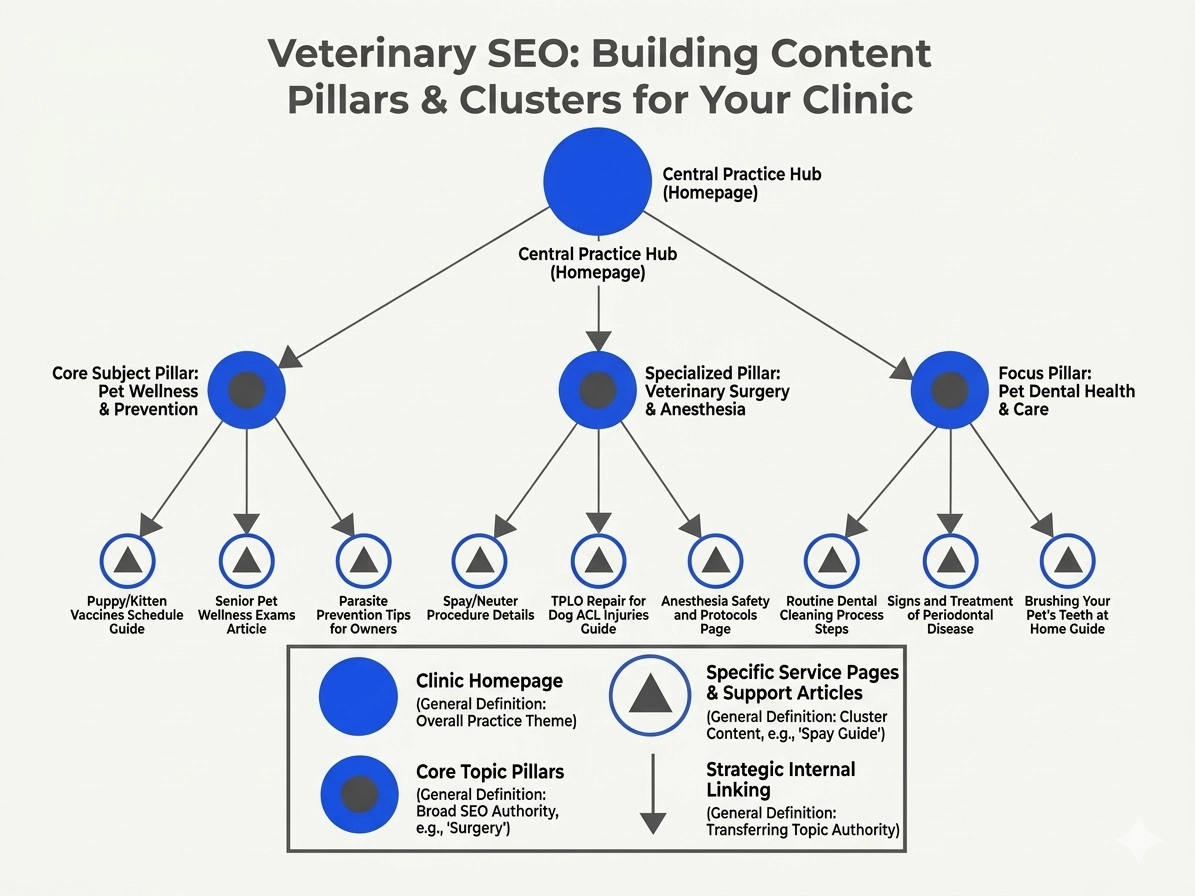
Think of your website as a web of interconnected pages. Your homepage links to service pages, service pages link to blog posts, and blog posts link back to services. This creates a clear hierarchy that search engines love.
5. Content SEO: Becoming the Authority
Content is what transforms your website from a digital brochure into a patient-generating machine. When you create content that answers real questions pet owners are asking, you attract visitors who need your services.
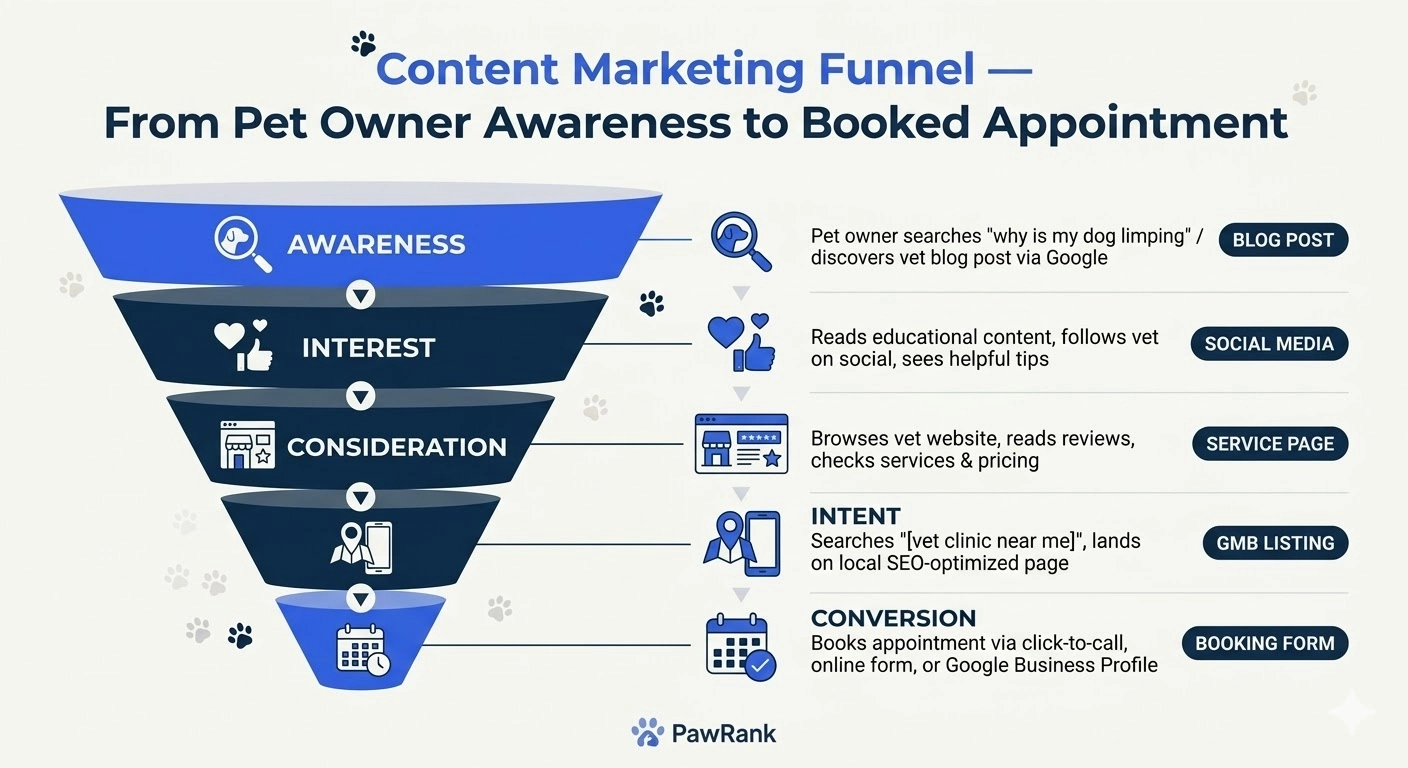
The Sales Funnel for Vet SEO
Content Ideas for Veterinary Clinics
- Seasonal pet health tips (summer safety, winter care)
- Common pet health questions ("What to do if your dog eats chocolate?")
- Service explainers (What to expect during a dental cleaning)
- Client success stories and testimonials
- Preventative care guides (vaccination schedules, parasite prevention)
- New team member introductions
- Community events and involvement
6. Technical SEO for Veterinary Websites
Technical SEO ensures that search engines can properly crawl, index, and understand your website. Think of it as the foundation that all other SEO efforts build upon.
Key Technical Elements

- Page Speed: Your site should load in under 3 seconds. Compress images, minimize code.
- Mobile-Friendliness: Over 60% of searches are on mobile. Your site must work perfectly on phones.
- HTTPS: Secure your site with SSL. Google marks non-HTTPS sites as "Not Secure."
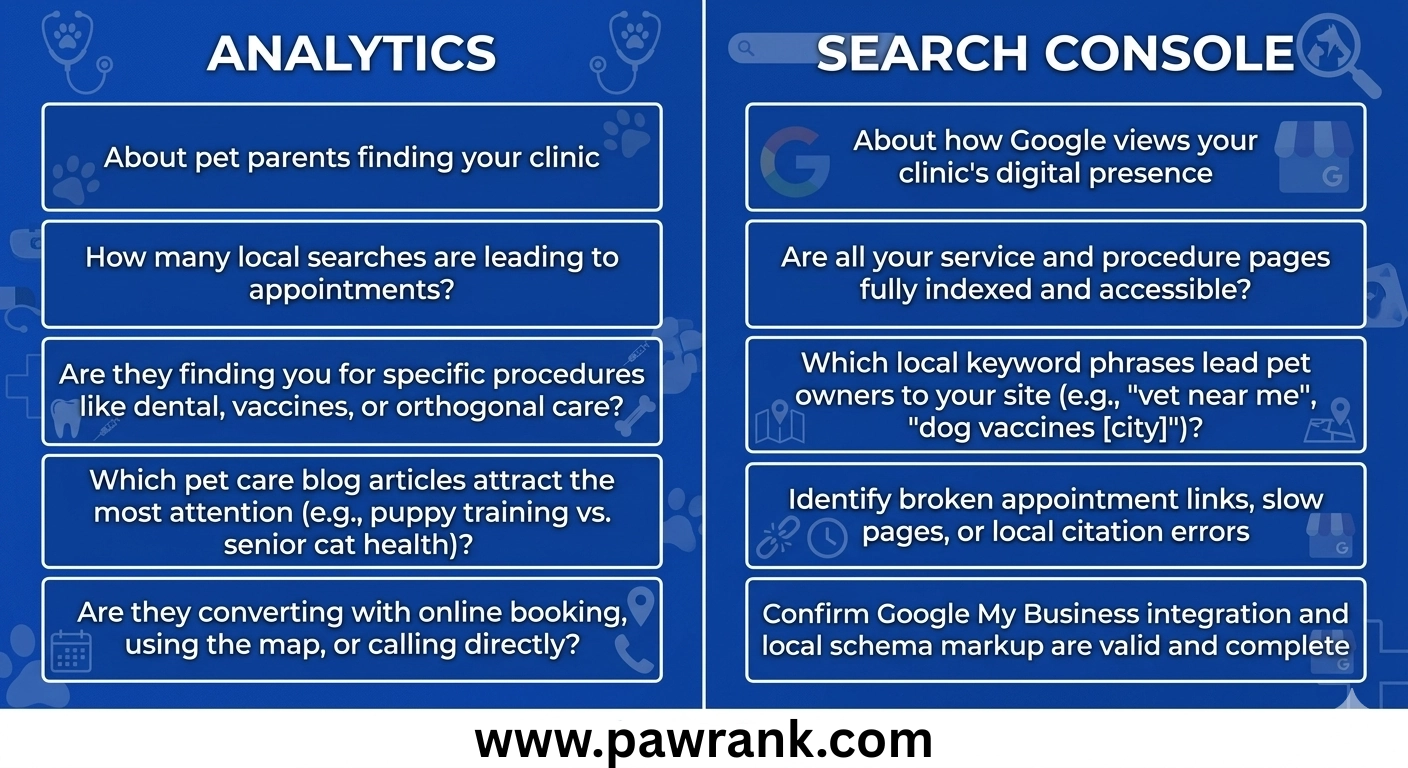
- XML Sitemap: Submit to Google Search Console to help crawlers find all your pages.
- Fix Broken Links: Regularly check for and fix 404 errors.
- Schema Markup: Add LocalBusiness and Veterinarian structured data to help Google understand your clinic.
7. Reputation Management
Your online reputation is often the deciding factor for potential clients. A strong review profile builds trust before a pet owner ever walks through your door.
8. Measuring Your SEO Results
You can't improve what you don't measure. Here are the key metrics to track:
- Organic Traffic: Are more people finding your site through search?
- Local Pack Rankings: Where does your GBP appear for key searches?
- Phone Calls: Are you getting more calls from organic search visitors?
- Form Submissions: Are more people filling out appointment requests?
- Review Volume & Rating: Is your review profile growing and improving?
- Keyword Rankings: Are you moving up for target keywords?
Need Help Implementing These Strategies?
This guide gives you the roadmap, but implementing a comprehensive SEO strategy while running a veterinary practice is a full-time job. Let us handle the SEO so you can focus on your patients.
Book a Free SEO Consultation